


The Bedard Effect: How One Rookie Shifted the Entire NHL Market
One teenager steps onto NHL ice — and suddenly ticket prices, jersey sales and revenue curves all change.
Game Recap — What Changed?
Before Bedard arrived in Chicago, seats were easy to find and prices were affordable. After he was drafted first overall, everything flipped. Every game he touched became a “must-see” event — not just in Chicago, but in every city he visited.
Jerseys sold out. Ticket resale prices exploded. Even TV ratings jumped whenever Bedard played. What looks like pure hype is actually a perfect real-world example of a demand curve shift.
Economic Analysis — Demand, Supply & Shortages
At the original price, there used to be a comfortable balance between how many seats were offered and how many fans wanted them. Then Bedard showed up, and demand at every price level increased.
When the demand curve shifts right while supply stays the same — like the fixed number of arena seats — the original price becomes too low. More people want tickets than there are seats available. That creates a shortage. The market reacts by raising the price until a new equilibrium is formed.
The same applies to jerseys: supply starts limited, demand suddenly skyrockets, and shelves empty instantly. Prices rise first… then producers increase supply later.
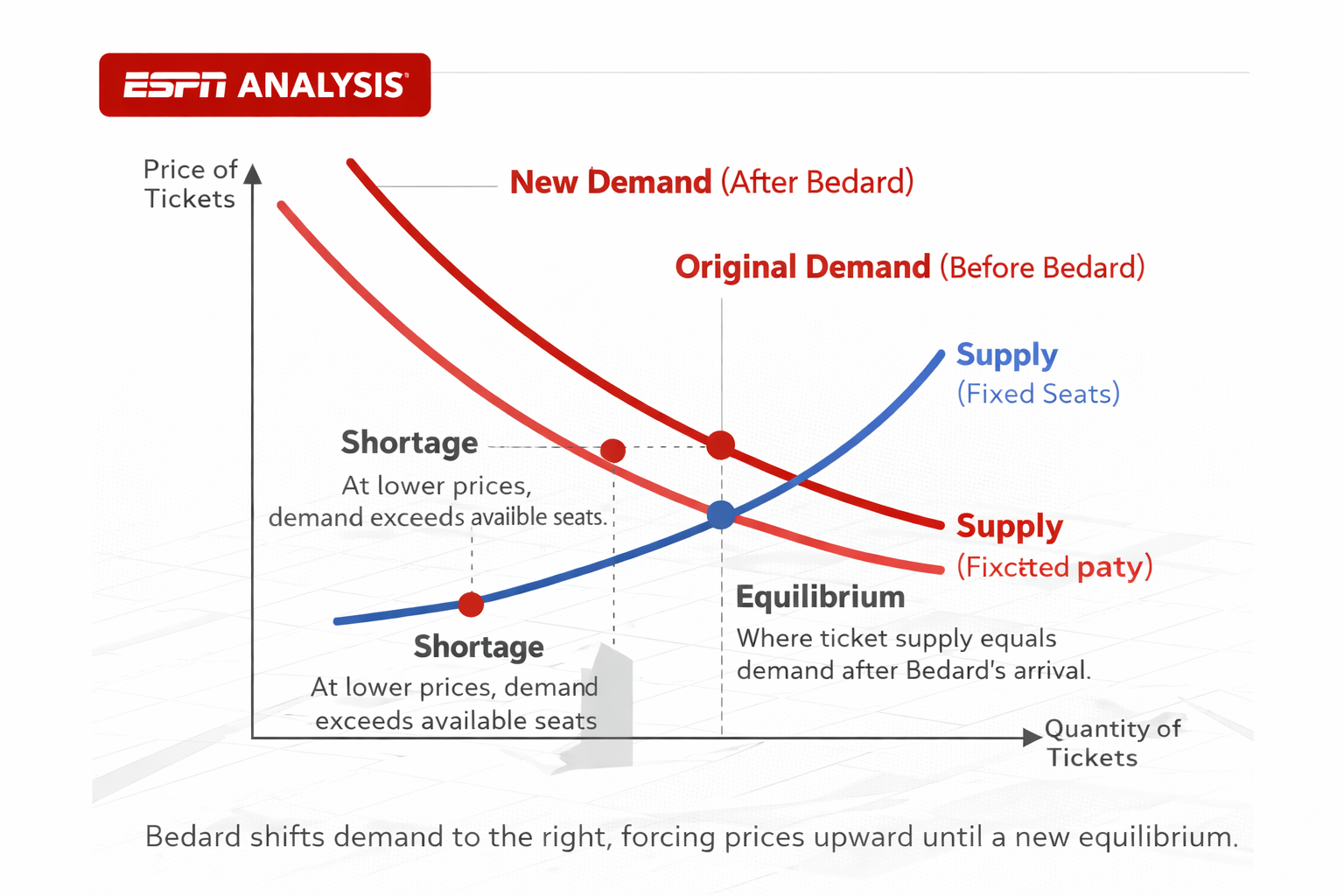
Where ticket supply equals demand after Bedard’s arrival.
At lower prices, demand exceeds available seats.
At very high prices, some seats remain unsold.
Bedard shifts demand to the right, forcing prices upward until a new equilibrium is reached.
Elasticity — Who Still Pays the Price?
Bedard super-fans treat tickets like a rare experience — they’ll pay almost anything to see him. That’s inelastic demand. Even huge price increases don’t reduce how many seats get bought by these die-hard fans.
Casual fans, however, drop out when prices spike. So the people left inside the arena are those willing to pay premium prices — a smaller crowd, but a more profitable one.
Key Unit 2 Concepts Used
- Law of Demand & Supply
- Shifts in the Demand Curve
- Market Equilibrium & Shortages
- Price Elasticity of Demand